Smith & Wesson is not just an iconic name in the firearms industry; it has left an indelible mark on popular culture. From the big screen to the airwaves, their models have been the stars of Hollywood’s most memorable scenes and have been immortalized in legendary songs.
At Frontline Armoury, we’re exploring the impact of Smith & Wesson on pop culture, focusing on two of its most iconic references: the “Dirty Harry” Model 29 and its famous mention in the salsa classic Pedro Navaja.
The Smith & Wesson Model 29: Clint Eastwood’s Magnum
“Do I feel lucky?” If that phrase sounds familiar, it’s because it comes from one of the most iconic scenes in action movie history. In the early 1970s, Clint Eastwood played the gritty detective Harry Callahan in Dirty Harry, wielding the massive Smith & Wesson Model 29 in .44 Magnum.
What made the Model 29 famous?
- Extreme Power: It was considered the most powerful revolver in the world at the time of the film’s release.
- Imposing Design: Its long barrel and high-luster finish became a symbol of authority and cinematic presence.
- Market Influence: After the movie premiered, demand for the Model 29 skyrocketed, making it nearly impossible to find in shops for years.
Fun Fact: Clint Eastwood himself helped cement the Model 29’s fame with the legendary line: “This is a .44 Magnum, the most powerful handgun in the world, and would blow your head clean off. Do you feel lucky, punk?”
Pedro Navaja and Smith & Wesson in Music
The legacy of Smith & Wesson extends far beyond the cinema. In the late 1970s, Rubén Blades released Pedro Navaja, one of the most emblematic songs in the history of salsa. The brand is mentioned in one of its most famous verses:
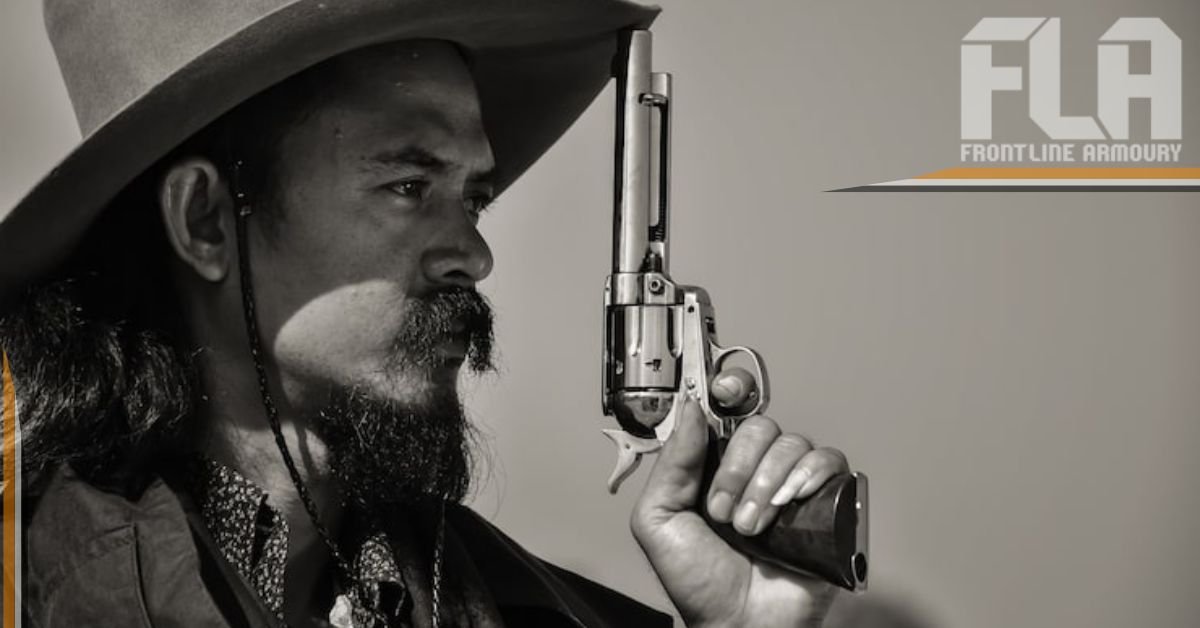
“Por la esquina del viejo barrio lo vi pasar, con el tumbao que tienen los guapos al caminar… Usa un sombrero de ala ancha de medio lao, y zapatillas por si hay problema salir volao, con un revólver Smith & Wesson del especial…”
Why is this reference important?
- Prestige: It reinforces the image of Smith & Wesson as a brand of choice and prestige.
- Cultural Connection: It associates the brand with urban storytelling and Latin culture, particularly in communities like ours here in Miami.
- Global Presence: It solidified the brand’s place in global music history as a symbol of the “street” narrative.
The Smith & Wesson Russian Model: Guns of Tsars and Outlaws
Not every famous Smith & Wesson model owes its fame to Hollywood or music. One of the most legendary is the Russian Model, a firearm that defined an era in both military history and the American Old West.
From the Tsars to Jesse James In the 1870s, Imperial Russia commissioned Smith & Wesson to produce a series of large-caliber, robust revolvers. This led to the creation of the Smith & Wesson Russian Model, a .44 caliber revolver with a distinct curved grip that set it apart from other designs of the time.
What made it special?
- Rugged Design: Built to withstand the extreme conditions faced by the Russian military.
- Top-Break Action: This design allowed for much faster reloading than many other contemporary revolvers.
- Stopping Power: Its .44 caliber made it a formidable choice on the battlefield and the frontier.
Fun Fact: Despite its name and Russian origins, the model was incredibly popular in the U.S. and was famously carried by legendary outlaws like Jesse James.
The Lasting Impact of Smith & Wesson
From the movies to the music charts and the history books, Smith & Wesson has left a permanent footprint on pop culture. Whether in the hands of Clint Eastwood, the lyrics of Rubén Blades, or the battlefields of the 19th century, the brand remains synonymous with power, precision, and prestige.
At Frontline Armoury, we carry a selection of iconic Smith & Wesson models, ranging from the classics to the most modern performance series. Visit us today to hold a piece of history.